+971 56 422 0432

Blog
Home • Blog


Home • Blog


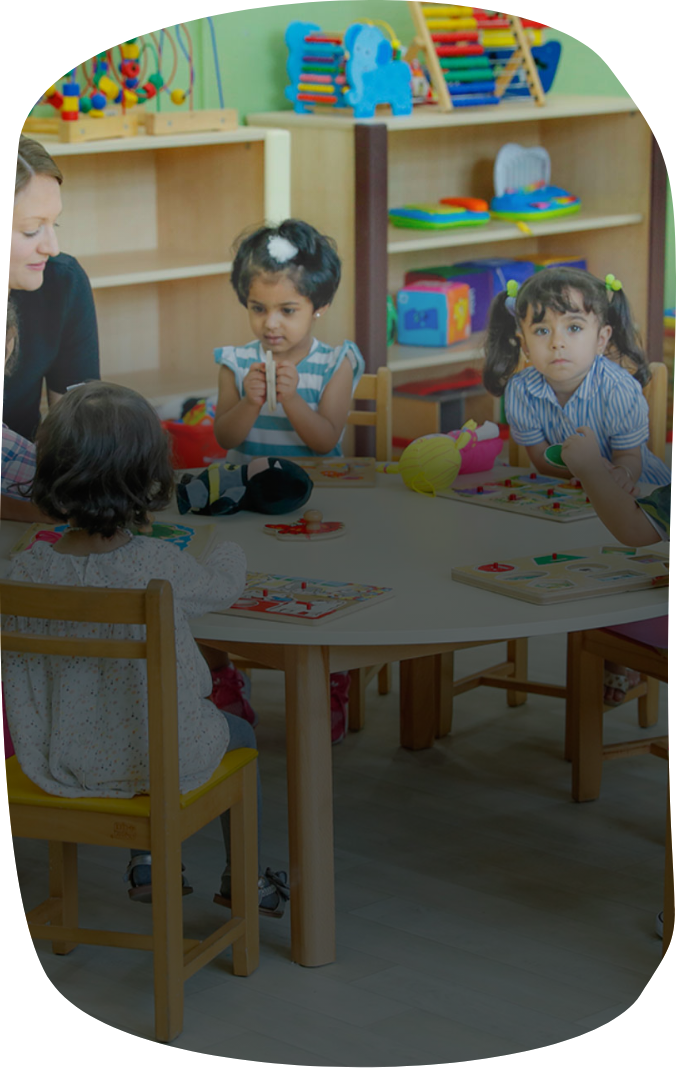
To an adult, building a tower or running a pretend café may look like simple entertainment. For a young child, it can involve planning, language, cooperation, counting, movement and problem-solving at the same time. Play-based learning in Abu Dhabi gives children meaningful ways to explore ideas while educators guide progress with clear developmental goals.
Play-led education is not an unstructured break from learning. In a well-designed classroom, materials, routines and educator interactions are intentionally selected to encourage communication, curiosity, independence and persistence.
During role play, children name objects, negotiate roles, listen to others and build stories. Educators extend vocabulary by asking open questions and introducing useful words naturally. Songs, rhymes, puppets and shared books further strengthen listening and sound awareness.
For children growing up in multilingual communities, playful interaction provides a low-pressure reason to communicate. A child can use gestures, familiar words and new vocabulary together while confidence develops.
Blocks introduce size, shape, balance and pattern. Sorting natural materials supports comparison and classification. Sharing pretend food can develop one-to-one correspondence and early number sense. Because these ideas are connected to an activity the child cares about, learning becomes memorable.
Play also encourages flexible thinking. When a bridge falls or a puzzle piece does not fit, children test alternatives. An educator can support the process without immediately solving the problem, helping the child develop patience and confidence.
Group play teaches children to wait, share ideas, understand another viewpoint and repair small disagreements. These skills take time and require sensitive adult support. Educators can name emotions, model respectful language and help children find a fair solution.
Imaginative play also lets children explore real-life experiences safely. Pretending to visit a doctor or welcome a new baby can make unfamiliar situations feel easier to understand.
Outdoor movement, dancing, climbing and ball play build strength, coordination and spatial awareness. Drawing, threading, modelling dough and handling small construction pieces strengthen the fine-motor control later used for writing and personal-care tasks.
Children also develop independence when they select materials, tidy a learning area and complete manageable tasks. These daily choices create a sense of competence.
Effective educators observe carefully. They notice the skills a child is practising, introduce a timely question or resource and record progress. The goal is to extend thinking while preserving the child’s ownership of the experience.
Parents can use the same approach at home without buying expensive toys. Cardboard boxes, cups, safe kitchen tools, water, play dough and everyday conversation can inspire rich exploration. Follow the child’s interest, describe what is happening and allow time for trial and error.
When exploring play-based learning in Abu Dhabi, ask how activities connect to developmental goals, how much time children receive for uninterrupted play and how educators balance child choice with guided experiences. Look for varied learning areas, accessible materials and adults who join play thoughtfully rather than directing every moment.
Teddy Bear Nurseries uses a whole-child approach and curriculum-focused interest areas to support learning through discovery. Families are welcome to visit and see how purposeful play builds the foundations children need for nursery, school and life.

Best Nursery in MBZ City: A Parent’s Guide to Choosing Quality Childcare

How to Help Your Child Overcome Separation Anxiety at Nursery
How Play-Based Learning Supports Early Childhood Development